Electric Fly Killer Machine for Restaurants and Food Units: Zapper vs Glue Board, Placement and Upkeep
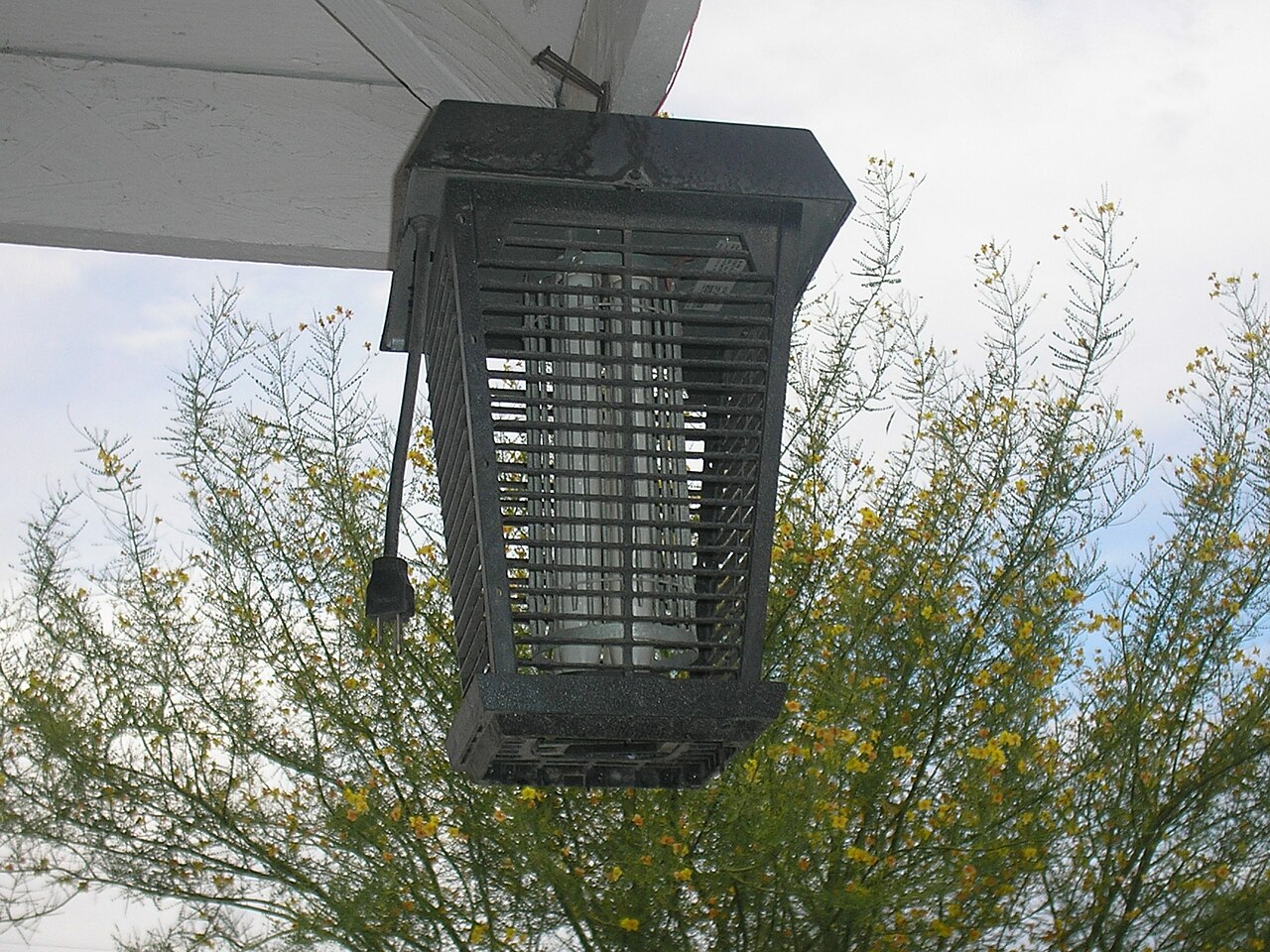 A UV bug zapper. Photo: ZooFari, Wikimedia Commons (CC BY-SA 3.0).
Restaurants, cloud kitchens, sweet shops and small food processing units in India all fight the same battle every monsoon and summer: flies. Spraying is not an option near food, and fly swatters do not scale. That is why most operators end up looking for an electric fly killer machine, and why Aircon Engineers gets so many enquiries from food businesses that have bought one and still see flies. In most cases the problem is not the machine itself but the type chosen, where it is mounted and how it is maintained. This article walks through those decisions for a typical restaurant or small food unit.
How These Machines Work
Every electric fly killer uses the same basic idea. Fluorescent tubes inside the unit give off UV-A light, which flies and many other flying insects are drawn towards. Once the insect reaches the unit, one of two things happens:
- In a zapper (grid) unit, it touches a high-voltage grid and is killed instantly, dropping into a tray.
- In a glue board unit, it settles on a sticky board behind the tubes and is trapped there.
The light does the attracting; the grid or the board does the catching. Which catching method you choose has a big effect on hygiene, as the next section explains.
Zapper or Glue Board for a Food Business?
A zapper is cheap to run and needs very little attention beyond emptying the tray. The drawback is that an insect hitting the grid can break apart, and small fragments can be thrown out of the unit. Over a corridor or a store room this is harmless. Over a tandoor station, a sweets counter or a packing table it is a contamination risk.
Glue board units avoid that problem completely. They are quiet, there is no crackle in front of customers, and the used board gives a clear record of what is being caught. If the board fills with tiny drain flies, you know to check floor drains and grease traps. If it shows house flies, the issue is usually doors and waste handling.
A sensible rule for food businesses:
- Dining area and front-of-house: slim glue board units, which are discreet and silent.
- Kitchen and prep zones: glue board units only, mounted away from open food.
- Back door, waste area, store rooms: zapper units are fine here.
Placement That Actually Catches Flies
Even the best unit fails if it is mounted in the wrong place. A few rules help:
Keep it low. Flies usually fly between about 1.5 and 2 metres above the floor. A unit high up on the wall near the ceiling catches far fewer insects.
Keep it out of sight from outside. If the UV light can be seen from the street through a glass door or window, the machine will pull insects in from outside. Mount it where the light is visible only from inside.
Put it on the entry route. Think about how a fly gets from the back door or the waste bins to your food, and place the unit along that path so insects are caught before they reach the kitchen.
Never above food. Do not mount any unit directly over a prep table, a sink, a display counter or open product.
Avoid bright competing light. Direct sunlight and strong spotlights reduce the attraction of the tubes. A slightly darker spot on the entry route usually works better.
Close the Door Before You Catch the Fly
The cheapest fly is the one that never comes in. In most restaurants and food units, the back door and the service entrance stay open for long periods because staff move crates, gas cylinders and waste through them all day.
For main and service entrances, a door-mounted air curtain creates a downward stream of air across the opening that flying insects struggle to cross, while also helping to keep air-conditioned air inside. It must be sized to the width and height of the door, or the airflow will not reach the floor and insects will get in under it.
Inside the building, the kitchen often connects to a store room, a cold room or a washing area. These openings see constant traffic, which is where strip curtains help most.
Strip Curtains Between Zones
Overlapping flexible strips close automatically behind staff and trolleys, so the doorway is never left wide open. Fitting PVC strip curtains on the doorway between the back area and the kitchen cuts down the number of flies reaching food zones and also reduces cooling loss from air-conditioned spaces. For cold rooms, low-temperature grade strips stay flexible and do not crack in winter or inside a chiller.
The most effective setup combines all three: an air curtain or strip curtain at the door, and a glue board unit on the inner side of that door to catch whatever slips past. If you are working on a larger site, this guide to air cutter machines for shop and warehouse entrances explains entrance sizing in more detail, and these notes on industrial PVC curtains for factories and cold rooms cover strip grades and overlap.
A Simple Maintenance Calendar
UV tubes do not stop glowing when they stop working. Their output drops with use, and after around 12 months of continuous running most tubes attract far fewer insects even though they still look bright. Plan replacements by date, not by failure.
- Every week: empty zapper trays and brush the grid (unit switched off and unplugged).
- Every month: change glue boards, or every two weeks during monsoon and summer.
- Every year: replace the UV tubes, ideally just before the peak fly season.
- Always: log the date of each tube and board change, as food safety inspectors and audit teams often ask to see this.
For factory settings, our earlier piece on electric fly killer machines for Indian factories compares grid and glue designs at a larger scale.
Final Word
A fly killer is only as good as the system around it. Choose glue board units near food, mount them low and out of sight of outside openings, keep the doors under control with air curtains or strip curtains, and stick to a fixed maintenance calendar. Done this way, even a busy kitchen can stay largely fly-free through the monsoon.
If you would like help choosing the right units or planning the layout for your restaurant or food unit, please get in touch with Aircon Engineers.